
November is Mouth Cancer Action Month, so we wanted to provide more information about mouth cancer, its causes, symptoms, and treatment options. When detected and treated early, it has an excellent prognosis, so if you have issues in your mouth, call our Northern Virginia office for an appointment. Don't delay and let anomalies develop into mouth cancer.
Mouth cancer, also called oral cancer, is any type of cancer that affects the mouth, including the:
Sometimes, cancers form under the tongue and only become visible when they have spread or become an exterior mass. If you notice any of the following in your mouth, call our Northern Virginia office immediately to get an appointment:
Although these don't necessarily indicate the presence of mouth cancer, they are anomalies that shouldn't be ignored. If you're uncertain about any issue in your mouth, make an appointment without delay. We recommend that everyone who is 18 or older get screened for oral cancer. The screening doesn't take long, it's not painful, and it's non-invasive. It can make the difference between developing oral cancer and detecting and treating it early. Early detection and treatment have the best prognosis, so call us to schedule a screening.
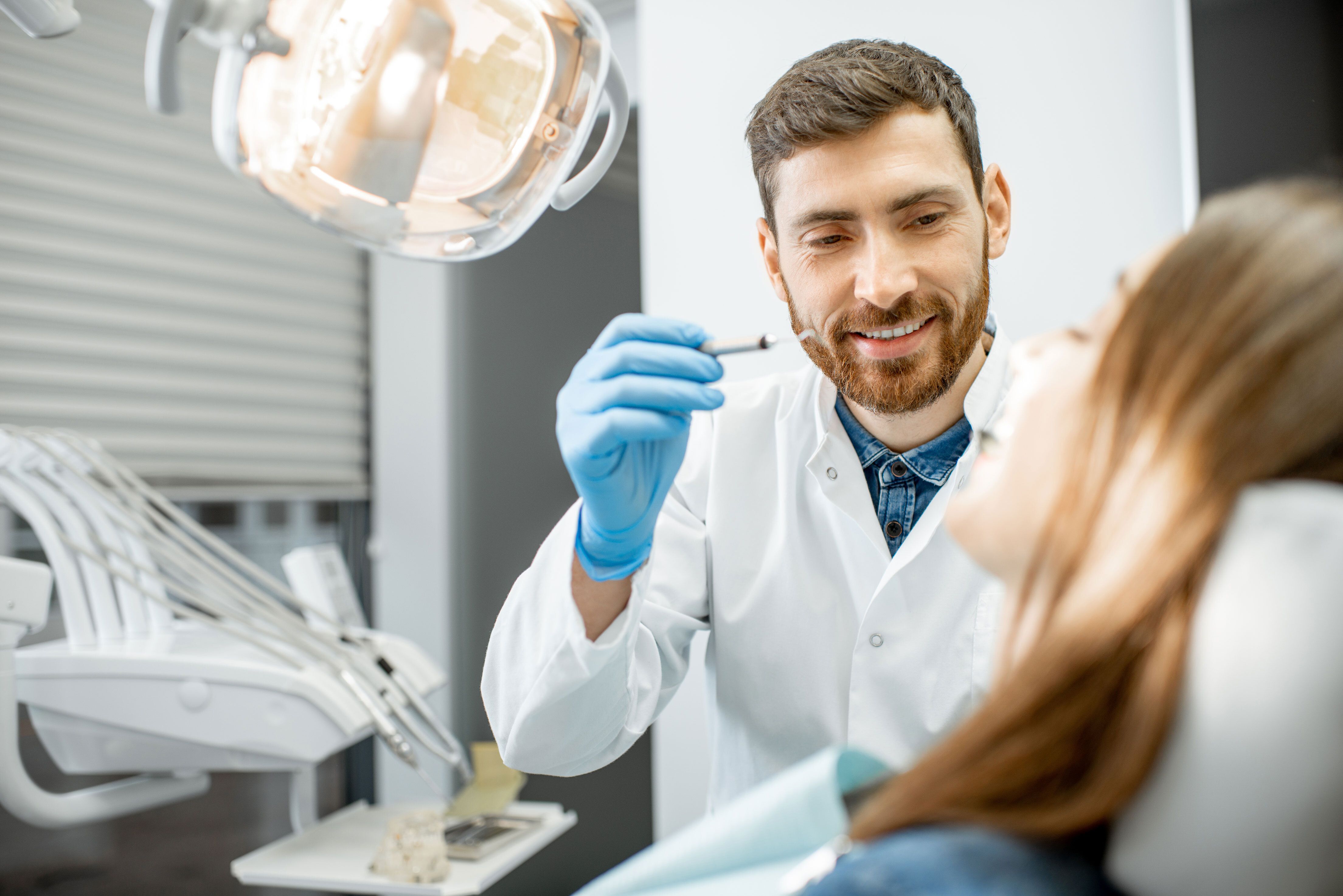
During your exam, your dentist will check the soft tissues in your mouth for lumps or other anomalies. These areas include your face, cheeks, neck, lips, and mouth and may extend to other areas of your head as well. You will not be able to detect these areas on your own. It takes the skill and expertise of a dentist who's been specially trained to detect mouth cancer.
If you're diagnosed with mouth cancer, your treatment protocol will be unique to you and will be based primarily on:
Treatment protocols can be as simple as removing the cancerous tissue or very complex, including chemotherapy and radiation. A newer type of treatment uses targeted therapy that precisely locates and targets the cancer cells. Your treatment team will discuss your options with you and the best course of therapy. A treatment team typically consists of your general dentist, an oncologist, and possibly a maxillofacial surgeon, depending on the invasiveness of the treatment.
Although mouth cancer may have a genetic component, such as if a first-degree relative has or had it, typically, it appears as the result of lifestyle habits. A first-degree relative is a parent, child, or sibling.
Typical lifestyle habits that can cause mouth cancer to develop include:
Although you can't control your age or your birth gender, most of the other factors are within your control, such as:
When you control the factors you can, you reduce your overall risk of developing mouth cancer. So do the best you can to control the factors that are within your ability to change, and don't stress over the others.
Remember, the best prognosis results from early detection and treatment, so if you haven't been screened for oral cancer, call our Northern Virginia office for an appointment. We can combine your screening with your annual exam and teeth cleaning, making it more convenient for you. Although oral cancer sounds very scary, we can help you and allay your fears, and we'll be there for you when you need us.
If you need to schedule an oral cancer screening or your regular exam, or any other dental procedure, then call Dental Associates of Northern Virginia at , and we can help you. Mouth cancer can affect anyone at any time, so don't delay making an appointment with our Northern Virginia office.
Call us today. We look forward to speaking with you and working with you.